
If your business invests time and effort in blogging, understanding Article Schema Markup are build a real difference. It helps search engines clearly know what your article is around, so your content reaches the right audience and achieve good in search results.
Article Schema is a type of structured data that labels important items like the title, author, publish date, and description. This allows search engines to show your content as rich snippets, which look more attractive, are more clicks, and improve all clarity.
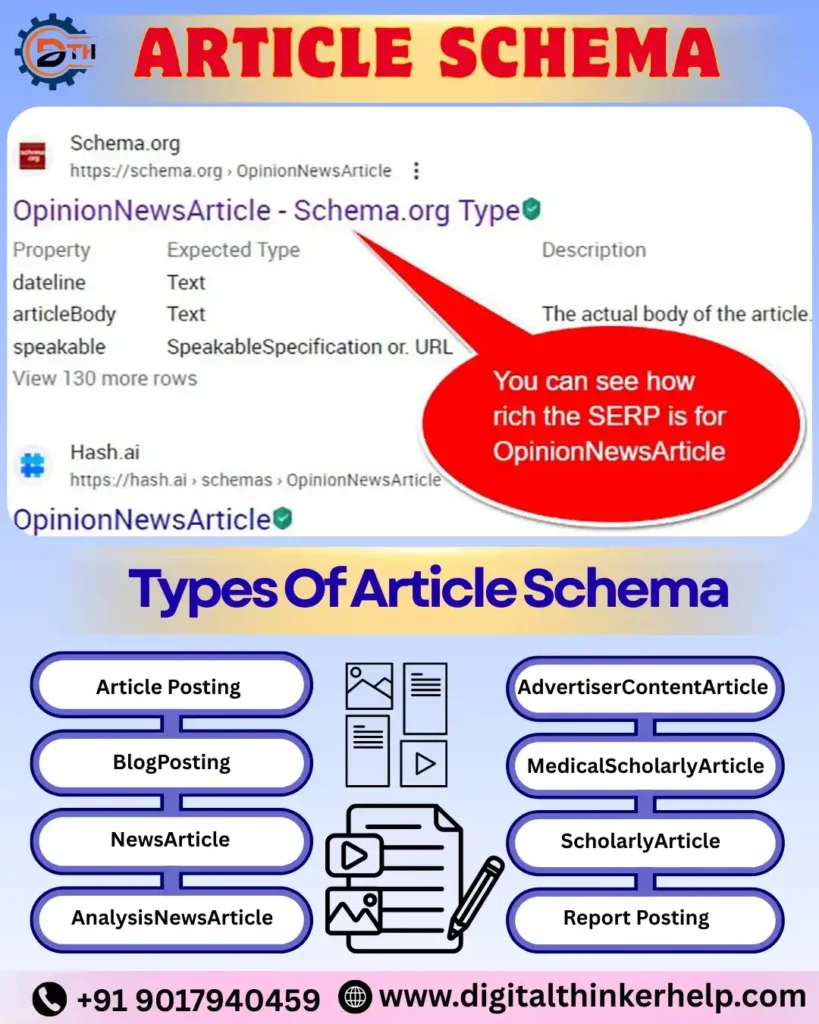
In this guide, we’ll walk between practical examples to show how Article Schema is easily adding to your content. When used correctly, it improves content performance and helps your articles stand out, attach your skill right with your audience is searching like.
What is Article Schema Markup?
Article Schema value is a type of structured data that helps search engines clearly know what an article on your website. It highlights important details like the title, author, publish date, and main content, so search engines that show your article in a more clear and attractive way in search results. Whether you are writing blog posts, news articles, or detailed reports, using Article Schema build it easier like search engines to read your content and helps your article stand out to the right audience.
Benefits of Schema Markup
Using schema markup is greatly improved how your website show in search results. It helps search engines understand your content better, which are lead to improved clarity and stronger all performance like your blog pages.
Also Read: What is FAQ Schema for SEO? Benefits, Examples, & Implementation
Better Search Engine Visibility: Article schema markup gives search engines extra details around your content. When added correctly, it is trigger rich results that show helpful information like images, publish dates, and author names, creating your article stand out alike other search listings.
Higher Click Through Rates: So your search result looks more informative and clear attractive, people are more likely to click on it. Items like thumbnails, author names, and dates help build trust and move users to choose your article over others.
Clear Context for Search Engines: Schema markup helps search engines clearly know what your article is about. By defining elements like the headline, main image, and content, search engines are match your article with the right search question more accurately.
Support for Voice Search: As voice search becomes more common, schema markup helps your content get picking as a spoken answer. When search engines understand your article clearly, they are more likely to use it like featured snippets or voice search results, show in more useful traffic.
Example Of JSON-LD Article Markup
<script type=”application/ld+json”>
{
“@context”: “https://schema.org”,
“@type”: “NewsArticle”,
“headline”: “Title of Your News Article”,
“inLanguage”:”en-US”,
“mainEntityOfPage”:{
“@type”:”WebPage”,
“@id”:”https://website.com/url-of-page-to-publish/”
},
“image”: [
“https://website.com/photos/1×1/photo.jpg”,
“https://website.com/photos/4×3/photo.jpg”,
“https://website.com/photos/16×9/photo.jpg”
],
“datePublished”: “2023-08-25T06:30:00+04:00”,
“dateModified”: “2023-08-26T13:12:00+02:00”,
“author”: [{
“@type”: “Person”,
“name”: “Primary Author”,
“url”: “https://website.com/profile/firstauthorname”
},{
“@type”: “Secondary Author”,
“name”: “Author Name”,
“url”: “https://example.com/profile/secondauthorname”
}]
}
</script>
Types of Article Schema Markup
There are different types of article schema markup, including:

1. General Article Schema
General Article Schema is the basic and most commonly used type of article schema. It works well like many kinds of written content, like daily articles, choice pieces, and informational pages.
When you add this schema to your page, you help search engines understand important fact like the article title, who wrote it, when it was published, and what the content is around.
Also Read: Alternate Page with Proper Canonical Tag – How to Fix
This build it easily like search engines to read your content correctly and show it correctly in search results, especially when your article does not fall into a more specific schema type.
2. Specific Types of Article Schema
Using more specific types of Article Schema helps you match the structured data with the exact type of content you are publishing. This gives search engines clearer signals about your article, built it easy like them to know and show it to the right audience.
These specialized schema types include extra details that describe your content more accurately, which are improve search clarity and create a better experience like users.
3. News Article
The News Article schema is build like content that covers current events or trending topics. Using this schema helps search engines know important details around your news story, like the publish date, author, and the section of your publication.
Also Read: What is Keyword Cannibalization in SEO? How to Fix with Examples
Some important elements of News Article schema include:
Dateline: Shows where and when the news was originally reported, which adds credibility.
Print Edition: If your story also looks in print, you are including those details.
Headline: A clear and compelling headline helps your article project in search results.
Byline: Finding the author builds trust and power.
Article Body: Marking up the main content make sure search engines capture the full story accurately.
Using the News Article schema properly builds your news content more visible and helps attract readers who are looking like the latest updates.
4. Blog Posting
Blog Posting schema is designed like personal or business blogs. It works best like content that is more casual and conversational compared to news articles. Adding this schema helps search engines understand and classify your blog posts better, creating them more likely to looks with rich snippets in search results.
Few important features of Blog Posting schema include:
Comment Count: Shows how many people have link with your post, highlighting engagement.
Author or Contributor: Gives credit to the writer, boosting responsibility and authority.
Publish Date: Allow readers and search engines know when the post move lives, which is useful like timely topics.
Blog Title: Clearly shows the subject of the post so users know what it is around.
Article Section: Organizes your post into the right category or section on your website.
Using Blog Posting schema not only helps your blog rank better in search results but also encourages readers to engage with your content by showcasing interactive elements unique to blogs.
5. Advertiser Content Article
The Advertiser Content Article schema is used like sponsored or promotional content. It helps search engines understand that the article is part of an advertising or advertising effort, which make sure your content is represented correctly in search results.
Also Read: What is Canonical Tag in SEO? Examples & Uses – Full Guide
Important elements of this schema include:
Sponsor: Shows who paid like the content, helping save transparency and trust with your audience.
Published Time: Show when the advertorial or promotional content was released that is useful like time open information.
Impressions Counter: If available, shows how many times the content has been viewed, showing its reach or approval.
Call to Action: High point the main action you must readers to take, such as visiting a website or signing up.
Educational or Informative Content: Smooth it is promotional; it must still provide value or helpful information to readers.
Using Advertiser Content Article schema correctly make sure that your promotional content is properly classified, transparent, and trustworthy like both search engines and users.
6. Medical Scholarly Article
The Medical Scholarly Article schema is designed like detailed research papers or articles in the medical field. It helps search engines understand and display specialized medical content correctly, highlighting its scholarly and research based nature.
Important elements of this schema include:
Peer Review Status: Shows anyways the article has been peer reviewed, which adds reliability.
Medical Specialty: Special the branch of medicine the article focuses on, helping the right audience find it.
Abstract: Provides a summary of the article so readers are know the important points without reading the full text.
Authors/Researchers: Lists the skills and attaching of the authors, boosting authority and reliability.
Journal: Show the medical or scientific journal where the article was published, providing context and academic reliability.
Using Medical Scholarly Article schema helps position your content as a reliable and good source, creation it easy like professionals and readers to find and trust your research.
7. Analysis News Article
The Analysis News Article schema is using like news content that goes behind simple reporting. It is meant for articles that provide in depth analysis, expert opinions, and detailed discussions of current events. Using this schema signals to search engines that your article offers a deeper explore of a topic, which is attract readers looking like more insight.
Important elements include:
Expert Authorship: Shows that the authors are important expertise or experience in the subject.
Methodology: Explains the research or analysis system used, add reliability to the content.
Argumentation: High point the main points and conclusions of the analysis.
Sources and References: Lists data, reports, or other sources that support the article.
Conclusions and Implications: Details the likely impact or future outcomes based on the analysis, helping readers take actionable insights.
Using Analysis News Article schema helps your analytical content reach an audience that value between research and well informed opinions.
How to Add A Schema Markup For An Article On Website?
If you have multiple articles on your website, adding schema markup are help them stand out in search results. One of the easy ways to do this on WordPress is by using a plugin like Schema Pro. Here are simple guide:
Create a New Schema: Go to the Schemas tab in the Schema Pro interface on your WordPress dashboard and click on “Add New.”
Choose Schema Type: Select “Article” as the type of schema you like to add.
Choice Pages or Posts: Decide which pages or posts must use this schema. You are also set rules to prevent sure pages if needed.
Map Properties: Schema Pro will map most fields automatically, but it is a good idea to double check. You need to map fields like:
Article Type: General article, blog post, or news article.
URL: Link to the article.
Headline: Title you want to display in search results.
Image: Featured image or other important images.
Publisher Name: Name of the website or company.
Also Read: What are Generic Keywords with Example? Branded vs Generic Keywords
Publisher Logo: Logo of the publisher.
Published Date: Date more article live first published.
Modified Date: Date more article live last updated.
Author Name: Name of the person who wrote the article.
Description: A short summary of the article.
Rating and Review Count: If important, involve star ratings and total reviews.
Publish the Schema: Once all fields get correctly mapping, save and publish the schema. Your articles are now improved like better in search results.
Adding Article Schema ask this way helps search engines know your content better and capable of improve how your articles looks with rich snippets, creating them more attractive to users.
Schema Blog Posting VS Article
BlogPosting Schema: This is meant like casual, regularly updated content like blog posts. It high point details like the author, publish date, categories, tags, comments, and social sharing. Blog posts are usually conversational, opinion based, and designed like engagement, with shorter length and daily updates.
Also Read: What Are Commercial Keywords in SEO? Examples & How to Find Them
Article Schema: This is like more formal, in details content that stays important over time. It focuses on the headline, author, and publisher; publish date, and important content. Articles are normally goal, research build, and written in a journalistic or academic style.
In Schema.org, both use the big Article type, but blogs normally use Blog Posting, which is a subtype of Article.
FAQs (Frequently Asked Questions)
What is Article Schema?
It is a type of structured data that helps search engines know important details around your article, like the title, who worst it, and it was published.
Where Should You Place Article Schema On Site?
You must location the JSON-LD code in the head part or at the top of the article page.
Is This Tool Compatible With All CMS Platforms?
Yes! You are use schema code on almost any CMS. It works are best platforms like WordPress, Webflow, Wix, and even custom and the built websites.
Final Thoughts
To sum it up, article schema value is a small piece of code added below blog posts and news articles that provide search engines extra details around what the content.
This helps search engines understand the page better, so your content has a better chance of showing as rich results in search pages, especially like important search queries.
Also Read: What are Transactional Keywords in SEO? Example & How to Find Them
Rich results show more useful information and stand out more than daily listings, which many time leads to higher click through rates and provide you a better chance to attract more organic traffic and conversions.