
Cloaking in SEO involves presenting different content or URLs to search engine crawlers than the visitors of and it is known as black hat SEO technique. It is going to intend to manipulate its ranking in the search engine results pages (SERPs) and it offer search engines a different version of a website.
The question arise what is the meaning of Cloaking in SEO? It is an unethical practice that could result in a website is being banned from appearing in SERPs. It also considers a form of search engine manipulation.
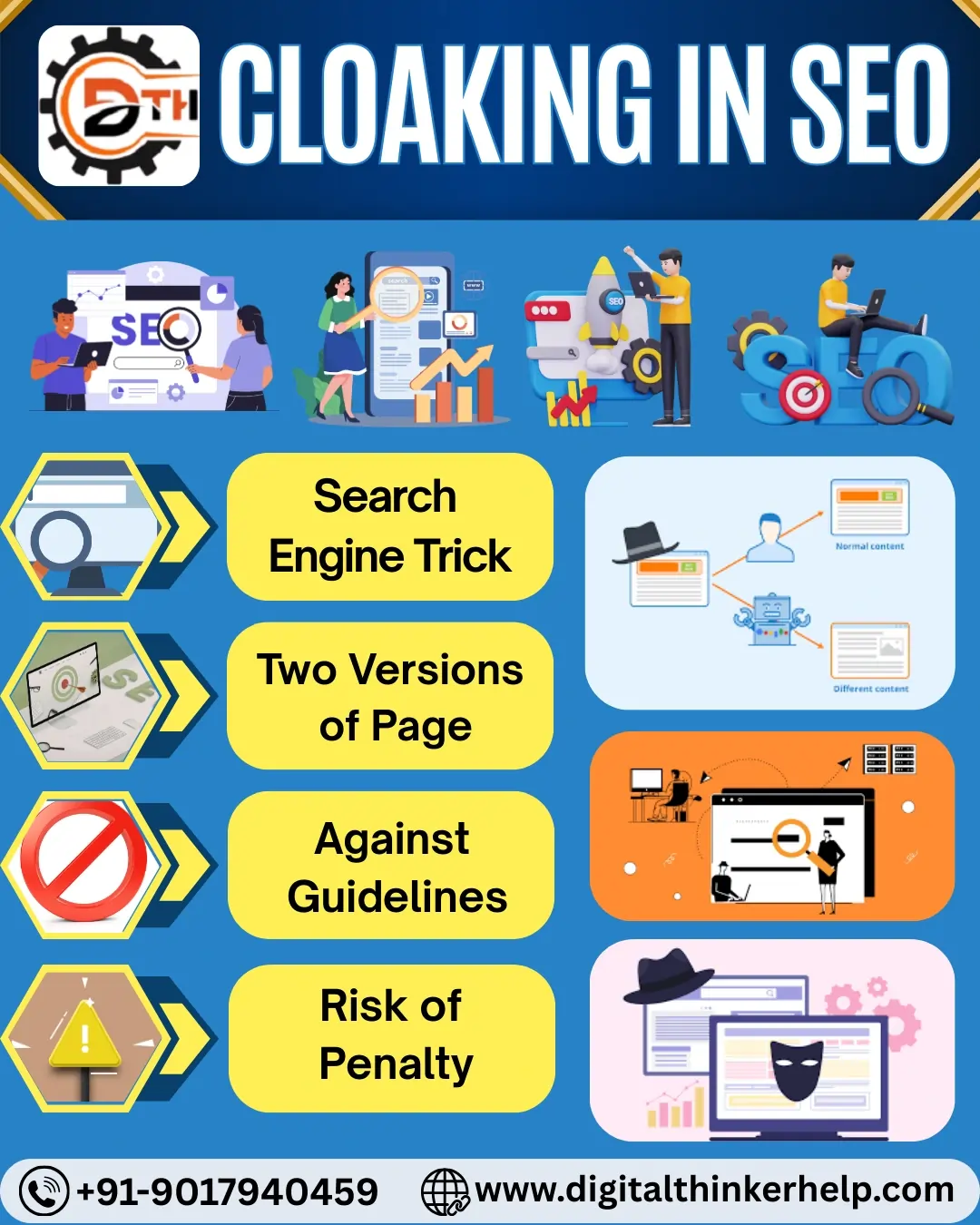
In this article, you will discuss the future risks and benefits of using it and study the practice of SEO cloaking. We will discuss best practices for avoiding search engine fines. We also look at some of the most common cloaking techniques.
What is Cloaking in SEO? Meaning in Black Hat
The goal of Cloaking SEO is improving the rank of a website in search engines. It is a practice that employed by some webmasters to display one version of a web page with different content to search engines and another to human users.
This SEO technique creating and developing two different versions of the same website:
- One for users
- Another for search engine spiders or crawlers.
Users and search engines literally get deceiving with this practice.
How does Cloaking Work in SEO?
As visiting a web page, your browser that are using like as (Google Chrome, Mozilla Firefox, Brave,…) begin by sending an HTTP request of this kinds to the site server:
Also Read: What is Cost Per Mille (CPM) Formula? How to Calculate It
GET: /indexfr.php
HOST: www.seo.fr
USER_AGENT=Mozilla/4.0 (compatible; MSIE 6.0; Windows XP; FREE)
REFERRER=http://www.google.com/search?hl=fr&q=analyse+d%27audience&lr=
REMOTE_ADDR=255.64.12.01
GET contains the name of the web page you want to see (in this example index.php)
HOST contains the name of the site where this page is located
USER_AGENT is the “signature” of your browser (in this example Internet Explorer 6, under windows XP, connected by free.fr)
REFERRER is the site from which you came (in this example, you launched a search on Google before accessing the seo.fr site)
REMOTE_ADDR is your IP address
The server of site loads (for HTML sites) or generates (for PHP sites) the page you request as soon as it receives this HTTP request. After this it sends back to your browser, which displays it: you can then read it.
It also makes it possible to recognize an indexing robot if the IP address makes it possible to determine in which country the visitor is located. Some sites keep an updated list of the IPs of the main indexing robots to facilitate their detection by the cloakers.
Now only left is to generate the pages full of keywords to show the robots. So they believe that the content is extraordinarily rich of the visited site.
Just in case you search for “cars” and you come across an adult site that has nothing to do with cars and it goes without saying that this technique is extremely penalizing for visitors. Therefore it is logical that the search engines are seriously trying to protect themselves from this.
Types of Cloaking in SEO
There are various forms of Cloaking. Every method does manipulation. How to show the content to search engine crawlers versus human visitors?
Also Read: What is Cost Per Click (CPC)? How to Calculate with Formula

Below are the some different types of cloaking in SEO:
1. IP-based Cloaking
In IP-based cloaking, it depends on the IP address of the user that to be displaying the content. It might be showing one version of the page when a search engine bot visits a website.
On the other hand, it is a less optimized version of the same page when a human user with a different IP address may see another. This type of cloaking is different from what regular visitors will see from the content to search engines.
2. User-Agent Cloaking
User-agent cloaking involves and identify between weather the user visiting the site is a search engine bot or a human. The server delivers different versions of the content it is based on the user-agent string sent by the browser or bot.
The keyword-heavy content that designed to rank well might be seen by the search engine bots. Meanwhile regular users see the different themes or lower keyword density content.
3. JavaScript-based Cloaking
If websites use JavaScript to display content then JavaScript-based cloaking occurs. The human users who have JavaScript enabled in their browsers the content will be shown only to them.
As search engine bots are not completely able to render or index JavaScript-based content correctly. So they see only partial or irrelevant content.
4. HTTP Header Cloaking
HTTP header cloaking works in such a way when a search engine bot requests a page, it shows different content. Webmasters can modify the header in such a way that the search engine gets optimizing content; but humans see different content.
5. Content Cloaking
Content cloaking is the easiest method. In this, search engine bots and humans are shown completely different content. The content for bots can be preparing according to specific keywords, while the page shown to humans may be different or may not match it.
What are the Risks of Cloaking in SEO?
SEO cloaking can quickly help in increasing ranks; but it is not free from risks. Search engines can fine you, traffic may decrease, and the brand’s image can be damaging.
Also Read: What is Cost Per Acquisition (CPA)? Formula & Tips | How to Calculate
1. Penalties from Google
Google can easily detect techniques like cloaking and considers them wrong. If your website is found doing this, Google can fine it. This can lower your website’s ranking or the site can be completing removed from search results.
2. Loss of Organic Traffic
If Google fine a site for cloaking, the organic traffic coming to that site decreases greatly. This reduces the website’s visibility and can also affect its earnings, especially when its business depends on search traffic.
3. Damage to Reputation
Cloaking is considering a wrong and false technique. If your website is caught using it, your brand image can be damaged. People who see such misleading content may stay away from your site in the future.
4. Legal Consequences
Website cloaking may even time result in violations of laws similar to deceptive or misleading advertising. Even time this are create legal problems. This happens less often, but the risk remains, especially like websites working with big companies or in industries with strict regulations.
5. Decreased Trust
Cloaking can reduce the trust of users and search engines in your website. Trust is very important in SEO. If it is lost once, regaining it can be a long and expensive process.
Cloaking Checker Tools
A cloaking checker is a tool that checks; whether a website is showing different content to search engines and users.
Also Read: What is Bounce Rate in SEO? How to Reduce & Check It?
It is a black-hat SEO technique called cloaking. This tool compares what search engine bots see and what regular visitors see.
Popular Cloaking Checker Tools
DupliChecker Cloaking Checker: Free tool that compares search engine view and user view of a webpage.
SiteChecker Cloaking Checker: It helps detect cloaking and other SEO issues.
Small SEO Tools Cloaking Checker: Simple online tool for quick cloaking detection.
SEO Review Tools Cloaking Checker: It shows differences between bot and human versions of a page.
FAQs (Frequently Asked Questions)
Summing Up
In conclusion Cloaking is a false technique in SEO. It can increase rankings fast. However, over time it can cause damage since the risks are higher. As we know cloaking violates search engine rules breaks users trust and can lead to severe fines.
Also Read: What Is Click Through Rate (CTR)? How to Improve It
To achieve lasting success in SEO, it is important to follow ethical practices, such as maintaining transparency and gives helpful content for users.