
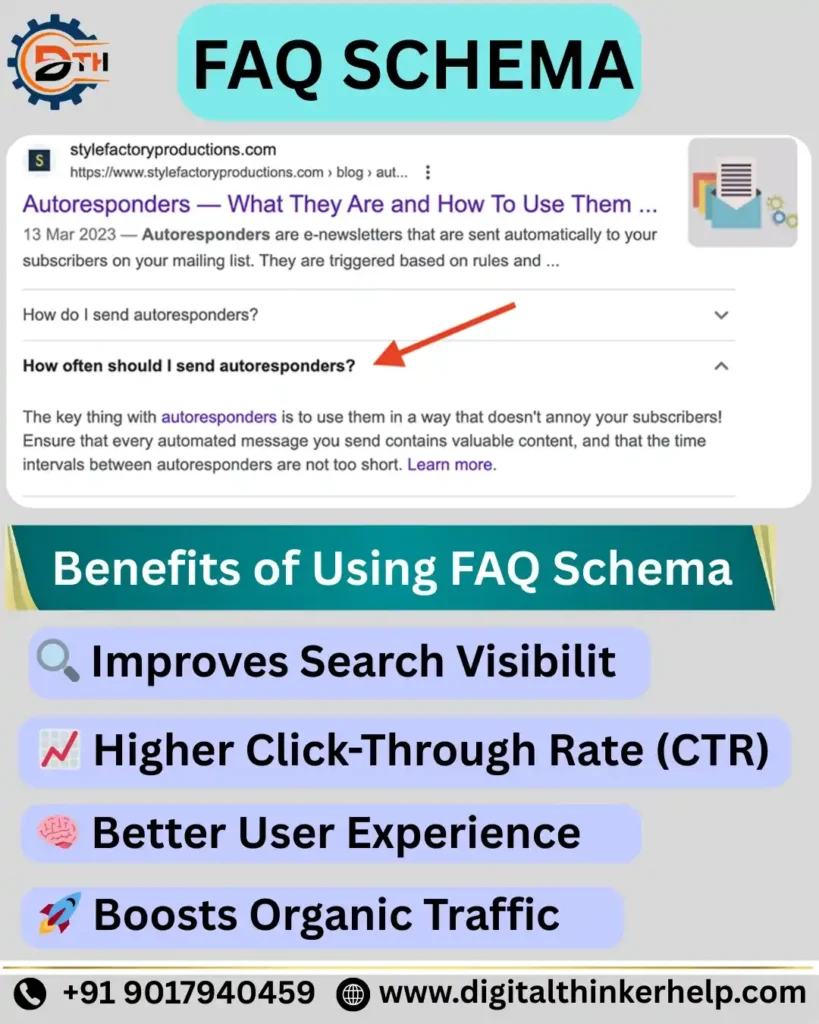
Schema markup is a simple and powerful tool that helps your website stand out in search results. By adding structured data to your pages, you build it easy a search engines to understand your content and show users the information they need to build decisions. But, today we will spread light on the FAQ Schema with its benefits, examples, and how to add in your website.
With hundreds of schema types available, choosing the right one like your most important pages are boost your organic clicks, improve conversions, and provide your brand an edge over competitors.
Let’s Get Starting!
What is FAQ Schema Markup?
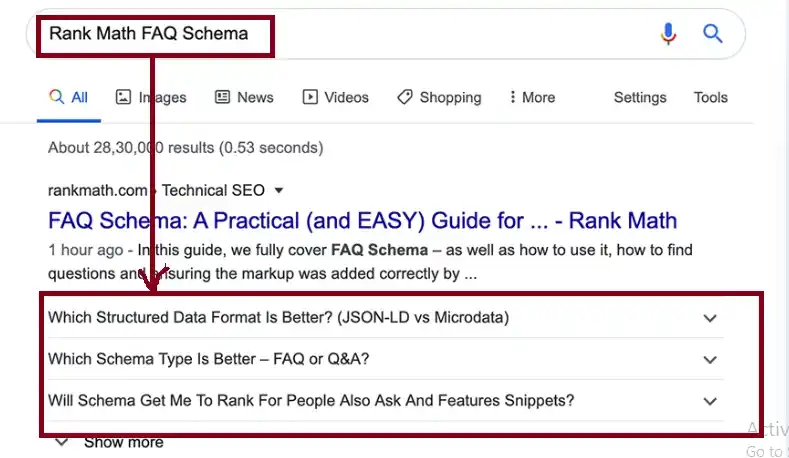
An FAQ page is a webpage that lists popular questions and their answers on a specific topic. When properly set up with structured data, these pages are show up as “rich results” (also called rich snippets) in Google Search end even be used by Google Assistant.
Also Read: Alternate Page with Proper Canonical Tag – How to Fix
According to Google’s guidelines, FAQ rich results are now mainly shown like trustworthy government and health websites. Like other sites, these rich results are less likely to looks. While you do not have to remove FAQ Schema immediately, you do have the option to remove it from your site if you prefer.
Here’s An Example What An FAQ Rich Snippet May Look Like:
Now that you know what FAQPage Schema is, let’s explore how it is benefit you and why using structured data are build a real difference like your website.
Importance of FAQ Schema in SEO
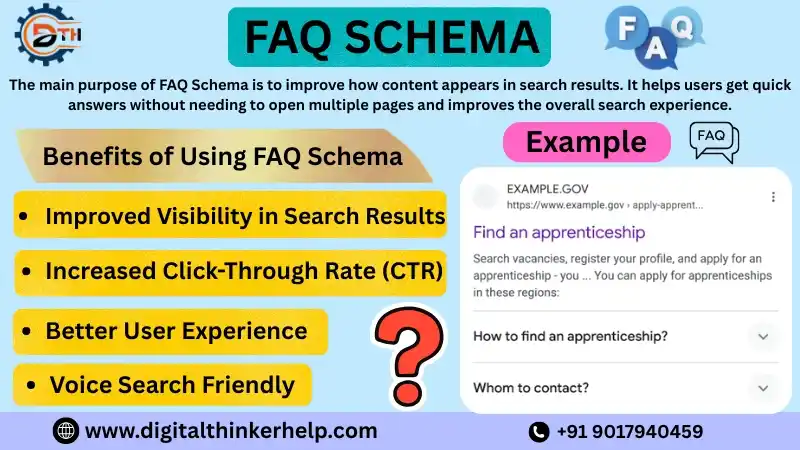
Why Use FAQ Schema: The main reason to use FAQ Schema is to boost your website’s visibility in search results. With more people using voice search and digital assistants, answering questions clearly increases your chances of showing in featured snippets or voice search results.
Key Benefits of FAQ Schema for SEO: Implementing FAQ Schema offers multiple advantages like your website and search performance.
Enhanced Visibility: FAQ Schema allows your content to looks as rich snippets or in Google’s Knowledge Panel, set your answers in a important spot at the top of search results and attractive more visitors.
Improved User Experience: Users are different provide answers without clicking through multiple pages, build their search experience faster and easy.
Also Read: What is Keyword Cannibalization in SEO? How to Fix with Examples
Increased Click Through Rate (CTR): Rich snippets extend in search results, creating your pages more attractive. Users are more likely to click in your content provides instant value.
Voice Search Optimization: As voice search grows, people many time ask digital assistants like Siri, Google Assistant, or Alexa. FAQ Schema increases the chances that your content will be featured in these voice search responses.
Better SEO Ranking: While FAQ Schema does not directly boost rankings, the follow higher clarity, engagement, and CTR are improve your SEO performance over time.
Avoiding Duplicate Content: FAQ Schema clearly marks each answer as different content. This helps Google treat your answers as unique, decreasing the risk of duplicate content issues.
Competitive Advantage: Many websites are not using structured data to its full potential. By implementing FAQ Schema, your site are stand out alike competitors and gain an edge in search results.
How to Find the Right Questions for FAQ Schema?
Choosing the Right Questions: Selecting the right questions like your FAQ Schema is crucial. It not only improves your search visibility but also provides valuable answers to your audience. Here are few of the best ways to find relevant FAQs.
Also Read: What is Canonical Tag in SEO? Examples & Uses – Full Guide
Google Autocomplete & People Also Ask (PAA):
Google Autocomplete shows are poplular liked searches as users type in the search bar. The People Also Ask section displays commonly asked follow up questions. Both are excellent sources like find what users are actively searching like.
Tip: Type a broad topic related to your business into Google Search and note the propose queries and PAA results.
Quora, Reddit & AnswerThePublic:
Platforms like Quora and Reddit are full of real user questions, while AnswerThePublic imagine popular search queries based on keywords. Analyzing these sources helps you find common cover and create important FAQ content.
Example: If people frequently ask “best SEO practices like beginners” on Quora, adding a related FAQ are attract targeted traffic.
Customer Support & Sales Queries:
Your support and sales teams deal with numerous questions daily. These real world queries highlight actual user pain points, build them ideal like FAQ Schema. Reviewing emails, chat transcripts, and support tickets are reveal reoccur questions.
Example: If customers many time ask about “refund policies,” including this as an FAQ improves user experience and reduces duplicative support queries.
Internal Search & Keyword Research Tools:
Data alike your website’s internal search shows what users are actively looking like. Tools like Google Search Console, SEMrush, and Ahrefs are help find high volume keywords and similar questions. Adding these to your FAQ Schema aligns your content with user goal and boosts clarity.
Example: If Google Search Console shows frequent searches for “how to implement FAQ Schema,” including this question in your FAQ section are drive more relevant traffic to your site.
How To Add FAQ Schema in Website? Manually Implement
Create Clear FAQ Content: Start by writing the FAQ section on your webpage. Follow Google’s guidelines by giving clear, direct answers to each question one question, one precise answer.
Also Read: What are Generic Keywords with Example? Branded vs Generic Keywords
Use JSON-LD Format: Build your FAQ Schema using JSON LD, as this is the format Google leave. While microdata is another option, it is more complex but it has to be added right into HTML elements.
Add the Script Correctly: Place the JSON-LD code inside <script> tags and insert it into then the <head> or <body> section of the same page where the FAQs appear. Be careful with formatting small errors or typos are create validation issues.
Use Tutorials and Templates: If you are new to schema markup, online tutorials and ready build templates are help. They provide you a solid starting point that you are customize as you grow more confident.
Maintain Content Consistency: Make sure the questions and answers in your schema markup just match the FAQ content noticeable on your webpage. Any mismatch are result in proof errors or penalties like misleading data.
Replace With Your Own FAQs: Always replace sample questions and answers with your real FAQ content, and ensure it is clearly noticeable on the page. By following these steps and best practices, you are manually implement FAQ Schema and improve your search clarity and click through rates.
Best Practices for FAQ Schema
Follow Best Practices: Using FAQ Schema the right way helps save your pages eligible like rich results and make sure you get the maximum SEO benefit.
Also Read: What Are Commercial Keywords in SEO? Examples & How to Find Them
Show FAQs Clearly on the Page: Only apply FAQ Schema to questions and answers that are fully visible to users. Avoid marking up hidden, collapsed, or dynamically loaded content.
Avoid Promotional or Irrelevant Questions: FAQ Schema must not be used like marketing or sales messages. Focus on genuine, helpful questions that provide real informational value.
Write Unique and Precise FAQs: Each question and answer must be clear, fixed, and directly address user intent. Avoid duplicate, vague, or generic content.
Use FAQ Schema Selectively: Apply FAQ Schema only to pages where FAQs truly support the user’s aim. Do not add it around your total website without purpose.
Update FAQs Regularly: Review and refresh your FAQ content to save it accurate, relevant, and eligible like rich results over time.
How To Add FAQ Schema In WordPress?
Adding FAQ Schema (FAQPage structured data) to a WordPress website helps your many time asked questions appear as rich results in Google search. Below are the best methods to implement it, starting alike the easiest choice to more manual approaches.
1) Rank Math (Free)
- Install Rank Math SEO
- Edit your page/post
- Add a FAQ by Rank Math block
- Enter questions and answers
- Save → Schema is added automatically
No coding required.
2) Yoast SEO (Free)
- Install Yoast SEO
- Edit your page/post
- Add the Yoast FAQ block
- Enter your FAQs
- Publish/update
- Yoast automatically injects valid FAQ schema.
3) All in One SEO (AIOSEO)
- Install All in One SEO
- Edit your page
- Enable FAQ Schema
- Add questions and answers
- Save
FAQs (Frequently Asked Questions)
Will FAQ Schema Always Appear in Search Results?
No, adding FAQ Schema does not contract that Google will show FAQ rich results in search. Google decides whether to display them based on factors like content quality, connection, reliability, and user search intent. Even when the schema is executed correctly, it may or may not looks in the results.
How Many FAQ Rich Results Can Show at the Same Time?
Google usually shows only two FAQ entries in search results, even if a page includes more questions marked up with FAQ Schema. The exact number are change depending on the search query, competition, and Google’s updated guidelines.
Can FAQ Schema Be Used on Non-FAQ Pages?
Yes, FAQ Schema able to be used on a page, but only as the content clearly follows a question and answer design. Adding FAQ Schema to useless pages, such as homepages or promotional landing pages, goes on Google’s guidelines and may result in the schema start ignored or removed.
Conclusion
FAQ Schema for Better SEO: FAQ Schema is a powerful way to improve your website’s SEO and boost visibility in search results. Structured data helps search engines understand your content better, makes your answers easier for users to find, improves overall user experience, and are run more traffic to your site.
Also Read: What are Transactional Keywords in SEO? Example & How to Find Them
Get Expert Help: If you like to take your website’s performance to the next level, platforms like ThatWare are assist you in implementing FAQ Schema and other advanced SEO strategies, helping your business stand out in aggressive search results.